Gnostic jargon


> I think that the True Man can be more accurately described as the

> Jesus-Man through which the Christ can become manifest.

>

> As for the mirror/reflection analogy … I think of the Biblical

> phrase that we were created in the “image” of God. The word “mirror”

> can be found in the definition of “image” … not that we are/were

> “The” God, but were created in the likeness of God … a reflection of

> the divine.

>

> Regards,

>

>


these are important questions


“I think that the True Man can be more accurately described as the

> Jesus-Man through which the Christ can become manifest.”


The power of God is with you at all times; through the activities of mind,


senses, breathing, and emotions; and is constantly doing all the work


using you as a mere instrument.”


 –The Gita


So is Jesus the vessel and christ wine that is poured into the vessel?


Or is Jesus the vessel and the wine as is the Christ?


One day as Manjusri stood outside the gate,


the Buddha called to him,


“Manjusri, Manjusri, why do you not enter?”


Manjusri replied,


“I do not see myself as outside. Why enter?”


> As for the mirror/reflection analogy … I think of the Biblical

> phrase that we were created in the “image” of God. The word “mirror”

> can be found in the definition of “image” … not that we are/were

> “The” God, but were created in the likeness of God … a reflection of

> the divine.


Where does God end and man begin?


“When my Beloved appears,With what eye do I see Him?


With His eye, not with mine,


For none sees Him except Himself.”


–Ibn Arabi


Two points as opposites when stretched for infinity will bend in upon themselves and meet. Thus mnaking the end in the begining, or perhaps that there is no end or beginning; see college level math and chapter one of the Sefer yetzirah in theory and practice, A. Kaplan translation.


if we are alike God, but not God… is this not duality?


If I am not God, does this mean that there exists God and not God?

.


“He who sees himself only on the outside,


not within, becomes small himself and makes others small.”


–Mani (turfan fragment M 801)


…..


Ain Sof in the Kabbalah of Azriel of Gerona


 (from “Origins of the Kabbalah” by Gershom Scholem)


 ”If…..there was at first a great deal of uncertainty about the use of the term ‘en-sof, no such ambiguity exists any longer in the mystical vocabulary of the school of Gerona [13th century]. ‘En-sof there is a technical, indeed artificial, term detached from all adverbial associations and serving as a noun designating God in all his inconceivability. Here it is well to remember that the determination of God as the Infinite served for for the thinkers of antiquity and the Neoplatonists…..precisely as a symbol of his inconceivability, and not as an attribute that can be grasped by reason (such as it became with the Scholastics). Among the kabbalists, God is regarded as Infinitude no less than as the Infinite One. The inconceivability of the hidden God and the impossibility of determining him, which, occasionally seem to point to a neutral stratum of the divine nature, are nevertheless those of the infinite person on the whole, the latter being the theistic reinterpretation of the Neoplatonic ‘One.’ Azriel himself introduces him as such at the beginning of his questions and answers on the sefiroth, for he identifies ‘en-sof—a word he employs often and without hesitation—with the leader of the world and the master of creation…..


        Azriel’s…..spoke of ‘en-sof as the God whom the philosophers had in mind, and whose sefiroth were but aspects of his revelation and of his activity, the ‘categories of the order of all reality.’ Precisely the most hidden element in God, that which the mystics had in mind when they spoke of ‘en-sof, he transformed into the most public. In doing so he already prepared the personalization of the term ‘en-sof, wich from the designation of an abstract concept begins to appear here as a proper name. Whereas in general, and even in Azriel’s own writings, ‘en-sof still has much of the deus absconditus, which attains anapprehensible existence in the theosophic notion of God and in the doctrine of the sefiroth only, the commentary on the ten sefiroth already presents the ‘en-sof as the ruler of the world, which certainly suggests an image of the government of the world that is very different from that of the theosophy of the Infinite and its sefiroth. For Azriel the highest sefirah is evidently the unfathomable or unknowable and especially the divine will, which in this circle is elevated above the primordial idea. In the abstract the latter could be distinguished from ‘en-sof, but in the concrete it constitutes a real unity with it. The hidden God acts by means of this will, clothes himself in it, as it were, and is one with it. In order to express this, the kabbalists of Gerona readily speak of the ‘will up to the Infinite,’ the ‘height up to the Infinite,’ the ‘unknowable up to the Infinite,’ by which they evidently mean the unity in which the supreme sefirah, represented in each case by the corresponding symbol, extends up to the ‘en-sof and forms with it a unity of action…..


        Azriel is fond of referring Job 11:7 : ‘Can you find out the depth of God?’ to this primordial depth of God, which can signify both the fathomable as well as precisely that in the will that is unfathomable and beyond the grasp of all thought. From this primordial depth flwow all the paths of wisdom and it is this primordial depth that in the ‘Chapter on the kawwanah‘ is literally called ‘the perfection of the depth that is one with ‘en-sof,’ a phrase that can also be translated equally literally as ‘that unites itself with ‘en-sof,’ that is, that extends up to its infinity. Thus the terminology of cheqer, the primordial depth, at which all contemplation of the divine is aimed, changes at the same time into that of the ‘undepth’ (Hebrew: ‘en-cheqer), this primordial depth proving to be precisely the unfathomable, and thereby a perfect analogy, in its linguistic form as well, to the Infinite, ‘en-sof.


        The will as primordial depth thus becomes the source of all being, and the deity, insofar as it can be envisioned from the point of view of the creature, is conceived entirely as creative will…..The fact that this creative will is then understood by Azriel, in the context of the ideas analyzed in the foregoing, as the Nought, is by no means an isolated instance in the history of mistical terminology. Jacob Böhme, whose Ungrund is reminiscent of Azriel’s formulations, considers the will that eternally emerges from this Ungrund as the Nought. It is therefore no wonder that in these writings the will never appears as something emanated, but rather as that which emanates…..


        A state in which ‘en-sof would be without the will accompanying it is thus inconceivable. This again raises the problem of the necessity of the emanation versus the freedom of ‘en-sof in the primordial act of the creation…..


        It can be said of ‘en-sof as well as of the Will that nothing exists outside it.


‘All beings come from the incomprehensible primordial ether, and their existence [yeshuth] comes from the pure Nought. However, this primordial ether is not divisible in any direction, and it is One in a simplicity that does not admit of any composition. All acts of the will were in its unity, and it is the will that preceded everything…..And that is the meaning of (Job 23:13): “He is One”—He is the unity of the will, outside of which nothing exists’ [Perush Aggadot, 107).....


Neither is 'en-sof nor in the will is there any differentiation; both are designated as the indistinct root of the opposites. For this indistinctness.....the 'Iyyun circle and Azriel use the Hebrew hashwa'ah; unseparated and indifferent is there called shaweh, literally 'equal,' a word that is never used in this snese elsewhere in the Hebrew literature. 'En-sof as well as the will are 'indifferent with regard to the opposites.' They do not conjoin the opposites.....but no distinctions are admitted at all; since the opposites in these supreme principles are 'equal,' that is, indistinct, they coincide in them. It is in this sense that mention is often made of the 'indistinct unity' or of the 'indifference of unity' in which apparent opposites coincide.....The oppoistes are abolished in the infinite.....


'En-sof is the absolute indistinctness in the perfect unity, in which there is no change. And since it is without limits, nothing exists outisde of it; since it is above everything it is the principle in which everything hidden and visible meet; and since it is hidden, it is the [common] root of faith and unbelief, and the investigating sages [the philosophers] agree with those who say that our comprehension of it can take place only through the path of negation’ [Sha'ar ha-Sho'el].”


Gender in Gnosticism

If the woman had not separated from the man, she should not die with the man. His separation became the beginning of death. Because of this, Christ came to repair the separation, which was from the beginning, and again unite the two, and to give life to those who died as a result of the separation, and unite them. But the woman is united to her husband in the bridal chamber. Indeed, those who have united in the bridal chamber will no longer be separated. Thus Eve separated from Adam because it was not in the bridal chamber that she united with him.

–Gospel of Philip

God, the one true God, the source of being is seen as a force that transcends gender and ultimately God is beyond categories of gender. But at the same time gender is very formative of our human experience. So just like God in an absolute sense cannot be contained in words but we still have to approach God through language, right? Through myths and stories and theology and…which is all kind of creating analogies about God. Similarly we have to approach God, or approach God through gender. And traditionally of course there’s been this hyper masculinisation of God, in which God has been primarily confined to male attributes, the father, the son or you know, God as the old bearded guy of the Cisteen Chapel ceiling or God as Superman, shooting down fire from the sky and destroying people. What Gnosticism works to change this image, not to destroy the male imagery of the father, the son or the imagery of the brother, but rather to compliment it with female imagery as well. SO that we understand in some sense that our relationship to God is like a father and a mother, like a lover and the beloved, a brother and a sister; so it’s like a complimentary to the relationship.

So what I want to talk about tonight is the metaphysical nature of gender itself. I’m going to leave the question of God alone for this evening and talk about our own experiences of gender and what the spiritual significances of those might be. I think we begin from a Gnostic perspective that gender arises out of the cosmos, out of the material reality or the physical reality and like other dualities, good /evil, light/dark, right/left…these are seen as the constituents parts of material reality, its these dualities and divisions and separations that make the material what it is and create the limitations that we associate with physical reality. And of these limitations it is probably gender that Gnosticism sees as the most traumatic one of all, well except maybe the good/evil dichotomy. But the division of male/female gender, the division is very traumatic in a lot of ways, it’s been a sort of division of the wholeness of the spirit into two separate pieces and as a result can often lead to very self destructive behavior as all too often when we adhere to the gender identity that we are taught to display and see in ourselves and we don’t find a way to pursue the complimentary aspects of the spirit then we quickly descend into patterns of abuse and dependence and domination that are really devoid of the true spiritual connection.


So one of the goals of Gnosis is to transcend and heal these dualities and divisions in human experience. And thus the question of gender and the question of how we heal the brokenness that is sort of implicit in it is stressed in the Gospel of Thomas especially saying 22:

Jesus saw some infants nursing. He said to his disciples, “These nursing infants are like those who enter the (Father’s) kingdom.”

They said to him, “Then shall we enter the (Father’s) kingdom as babies?”

Jesus said to them, “When you make the two into one, and when you make the inner like the outer and the outer like the inner, and the upper like the lower, and when you make male and female into a single one, so that the male will not be male nor the female be female, when you make eyes in place of an eye, a hand in place of a hand, a foot in place of a foot, a likeness in place of a likeness, then you will enter [the kingdom].”

So when we look at this issue of what needs healing and the reconciliation, the issue, the problem, is that we’ve been taught and conditioned not just in our own lifetimes but over in generations of humanity to ascribe huge importance over what are really minor biological differences and not really seek to expand our consciousness in this area. To assume that we are locked in this duality and that there is no way to transcend it.

So what Gnosticism does, is to argue that each of us has a spiritual identity and it is the spiritual identity that can lead us back on a path to wholeness this is because even though we live in a very divided and sometimes painful existence in the physical world the spirit has what the Gnostic teacher Carpocrates would call a “deep spiritual memory.” These are the words he uses “the spiritual memory.” The most famous place where he talks about what this memory is when he makes his Christological statement about Jesus and says “That Jesus is a man like any other man, the son of Joseph; except that he was different from other people in that his mind, pure and clear could remember, could exercise memory of what it had seen in the realm of the ungenerated God.”


So if Jesus is a great model for what we can attain, then through Gnosis we can gain access to these spiritual memories of what was in the realm of the ungenerated God, to use Carpocrates’ term. And these memories are of wholeness, of a unity, indeed not a cessation of our individual existences, but rather as it were a completion of them. And part of this spiritual memory of wholeness beyond the divisions of gender is part of what makes up this spiritual memory, and it is in this sense that the Gospel of Thomas puts this question as central to the idea of what is going to bring us into what the Gospel calls the Kingdom. It is very important to make clear here that, the Gospel of Philip makes it clear that not only is this unity, the Pleroma, the fullness, it’s not only our destiny, but it’s also as spiritual beings, but also as in the words of the Gospel of Philip, our earliest origin, the earliest origin of things. So there is some way that this wholeness of the Pleroma is imprinted and on our spirits, this pneuma or the breath that gives us life, or rather makes us human, and we can access those memories that are imprinted on us. But it is something that takes time as we are held back by other things.


So when we begin to pursue through Gnosis a kind of healing and wholeness through the question of gender a number of things begin to happen in our lives and in the way we experience the world. First of all we begin to revolutionize the way in which we relate to others especially those of the other gender or to use the more common term, the opposite sex…and really what begins to happen is instead of seeing them quote “as the opposite sex” as something to be possessed or owned or intimidated or feared or dominated or dominated by in an unhealthy way, we can begin to construct relationships with those of other genders in a way that really engage in a true human level; and seek on those others how we can begin to complete our own spiritual existence. In this sense relationships between men and women are very important because they have so much to teach us about this completeness, this wholeness and what it might look like. We are in many ways, forces of revelation to each other. Allowing us to open up the mysteries of the hidden things concealed in those things visible, to use the words of the Gospel of Philip. Or to return to the Gospel of Thomas as Jesus says “The person of light, lights up the whole world.” Or in other words, we are each other’s light. These places of spiritual wholeness are sometimes shrouded in a kind of darkness and ignorance. Through the light provided by other people we can begin to see the contours of their meaning.


So I think there is an importance for anyone seeking the Gnostic path to obtain a certain degree of intimacy with people of the opposite sex. Now what I want to make clear is what I am talking about is not tied in any way to what is called sexuality. I’m certainly not saying that heterosexual sexuality is somehow necessary for Gnosis, although it can indeed be an important manifestation of this kind of intimacy. Or it can be a barrier to this kind of intimacy, as we know. Of course we know there are lots of people who are simply not heterosexual. They don’t share this sexual orientation, as part of their constituent identities; they have some kind of other sexual orientation; that they are drawn to other ways of living as sexual beings. Gnosticism of course is generally open to lots of different forms of sexual identity.


But ultimately what I am saying is, it is not that important about sexual contact, it’s about intimacy. The kind of inter gender intimacy that can be pursued in lots of ways. Through friendship, through intellectual exchange, through the kind of connection where you learn to build mutual networks of care…and exchange of thoughts and ideas, and spiritual growth. Men and women learn from each other in a mutual way when they begin to experience this intimacy. Which indeed, indeed, even when it does involve sexuality, when it does involve heterosexual contact is in fact something that transcends it. It is an intimacy that takes place on the spiritual level and transcends merely the physical level.


So this should make clear, as is important to state, that gender like other forms of division in the material world are not EVIL; it’s not as if gender is something bad and evil and something we want to run away from. These sources of division are indeed sources of limitation. U ironically or paradoxically, the very things that create these limitations can be the sources of the transcendent liberation, that can lift us up out of the world as defined by limitations and limits or rather live in that world in a way that helps set our spirits free.


The question of suffering, similarly suffering is something we see as to be transcended through Gnosis but at the same time, it offers us things. It offers us understanding and compassion toward others. Again it can make us bitter and angry people or it can make us much more open to other people. And I think gender is much the same way. It can be a very troubling phenomenon or it can be something we harness the force of to propel us along the spiritual journey in a way that incorporates healing and reconciliation. So ultimately I think though, the pursuit of gender wholeness, if that is what we want to call it, is probably more importantly something that happens within ourselves. Our intra-gender identities rather than our inter-gender relationships.


When we begin to search for that spiritual memory that Carpocrates talks about; that memory of spiritual wholeness. In the Pleroma, that was later divided through the shaping of the Demiurge. We are really searching to recover in our own beings a wholeness of gender that has been divided and separated in our own experience of life. It is important to remember that of course that, Demiurgic forces and Archonic forces and Pleromic forces are not so much beings but are forces operating within us. So we are looking for something in our own identities and what we want to do is move closer to wholeness. And it is this wholeness that is already deep within us. As I said, as Carpocrates said it is imprinted on the spiritual memory, that we all possess through the pneuma, through the spirit that is within us.


So we want to move closer to that wholeness that is both our ultimate destiny and is our earliest origins. To use the words of the Gospel of Philip, we want to gradually transform our lives, and our beings and our existences into that image of that spiritual memory at the heart of the pneuma, the spirit. Which is indeed what really makes us human.


The journey of Gnosis is predicated on the idea that even in the midst of this limited material existence we can begin to transform things and transform ourselves. Our bodies, our minds, in a way that infuses them with a new wholeness of the spirit. And as you see in that same verse, saying 22 of the Gospel of Thomas that we not only recreate the unity of gender, that it goes on to say that we, it goes on to say that we, you know, make the hand in the place of a hand and the foot in the place of a foot and likeness in the place of a likeness… One way to think of that is it is talking about a recreation of the self and the image of the spirit. Or as some have said, through our spirit we are created in the image of God. What we need to do through Gnosis is to recreate ourselves into the likeness of God. That is to transform the entirety of our being into a full realization of this image of God that is in our deepest human natures.


In a very real sense we have already in our spirits a sort of latent inner partnership between things we have called male and female in our experience of the material and intellectual world. Thus, in a very real sense each of us has within us, a sort of inner man and inner woman, what some mystics have spoken of as the Animus and Anima. We must pursue the kind of inner metaphysical partnership that will allow their mutual complimentarity that will shine forth in our lives and transform our consciousness.


Just as we want to revolutionize our relationships externally with regards to gender, and the opposite sex; so in parallel, we want to revolutionize our gender relationships internally within our own identities.


Now, if we look at Christ and Sophia, I want to discuss how they personify a Gnostic theory of gender both in terms of what we should do unto others and how we should persue that wholeness of gender within ourselves. We see in the stories of Christ and Sophia a great exchange, a great partnership, a sort of dialogue that is going on in these stories of “cosmic missions” and developments in time. These forces that represent in some sense the feminine and the masculine within the whole unity of the Pleroma.


If we look at the creation myth of the Valentinians, these were the Gnostics that followed Valentinus, the great preacher of the 2nd century, it is a little more different and complicated from what you may be used to. Just to give you a taste of what I mean, what happens to Sophia in this story is that… of course it starts off the same, she’s an Aeon, she’s in fact sometimes portrayed as the yuoungest of the Aeons, and she goes off by herself. Wanting to obtain more about her origins, thinking she can learn more by being alone and thinking alone. This of course brings about division and separation. What she produces, now in the Valentinian story is not the Demiurge immediately, but rather a realm of imperfection, the cosmos or chaos which is the stuff that the Demiurge will later create the cosmic world. What happens in the Valentinian story (again you’ll see how this is different to the simpler Gnostic story) is that this is so traumatic that Sophia literally gets split into two pieces. There ends up being a higher Sophia, who remains kind of connected fully in the Pleroma, but there also emerges a lower Sophia, part of Sophia’s identity becomes trapped in the imperfect realm. It becomes trapped in the cosmic chaos, and it tries and tries to get out, but it can’t. What happens is the Demiurge emerges out of the imperfect realm and begins to create all this stuff and eventually creates human beings. In the Valentinian story the Demiurge thinks its creating everything on its own for its own power. But in fact the lower Sophia (Echamoth) with the help of the Aeons, is influencing the Demiurge. They are subtly, sort of influencing what he does. In particularly, subtly pressing him into the creation of human beings.


The lower Sophia realizes the only way she can free herself and the rest of the spirit that is trapped in the cosmic world is if there can emerge some kind of beings that will have some kind of amalgamated identities. That is, they will be, part of the cosmic world and part of the spirit world. Part cosmos and part Pleroma. This she sees in human beings. So there is a sort of subversion of what the Demiurge wants to do. He wants to create automatons to worship him, but Sophia wants to create autonamus beings that can achieve liberation. So it is the lower Sophia, in this Valentinian story that comes into the form of the serpent. The lower Sophia says, “Alright, I have to get in contact with the human beings.” And so she says “What I’ll do is that I will go into the most humblest and the most simple of physical things. This animal that simply slithers along the ground, the serpent.” The Demiurge is so overwhelmed with his own arrogance and his own power that he’s not going to notice something as humble as the serpent. It is going to be completely off his radar screen.


So the lower Sophia, enters the serpent and comes to the people and then has the dialogue in which she begins to tell them the truth about things which is as she says, the Demiurge is not the one true God. That in fact human beings have this divine core within them and that if they would have the courage to eat the fruit of moral truth, if they have the courage to face the realities of the universe or rather not the universe but of all existence. Then they too can be transformed into God.


So you can see that is a little more complicated than other stories. I wouldn’t say it contradicts “on the origin of the World” more that it compliments it. What we see is the relationship between Christ and Sophia becomes more explicit. When Christ comes down to earth and manifests in the human being Jesus, Valentinian Gnostics would say “Why?” you know, why? This is a problem, why does Christ come into the world? I mean what is the point? They would say it is to help liberate Sophia. It is because Sophia is so important, so fundamental to him in the Pleroma, that he sees the lower Sophia and the rest of the spirit in the cosmic realm. He wants to enter that world; he wants to be willing to empty himself into a human existence so that he can help bring about the liberation of the lower Sophia and the reunification of the two parts of Sophia. Because there is a great pain involved in the separation for every being in the Pleroma because their wholeness has been ripped apart. So there is very much a sense that Christ and all the other beings or Aeons and God, even God, is deeply moved by compassion. It is compassion that moves all of these forces to try to help us. It is compassion and it is suffering. As Origen, an early Christian theologian said something interesting, he said, he was talking about Jesus Christ and he said “Christ suffered before he died on the cross.” And that “Actually Christ suffered before he was even born.” He goes on to say that “If Christ did not suffer, he would have never have come down to Earth.” That is his explanation of why Christ enters the world. That you can see is tied into this very interesting relationship between Christ and Sophia.

Brother Matthew Ouroboro

……………………………………………………………………………………………………………………………

Sophia: Means “Wisdom.” Like the Logos this is considered a primal form. While the Logos is personified as male, Sophia is female. Logos has a direct and intellectual basis for guidance, Sophia is inspirational (sometimes even sensual). The basic idea is comparable to wisdom being Sophia (sofia) or “Holy
Spirit” in the form of pure wisdom. Pistis, means faith, hylic, or Prunikus Sophia refers to the imperfect or earthly state of the living, or earthly form from Pleromic origins. ”As appropriated by Sethianism and the Gnostics in general, Sophia is a hypostatized form of Hokmah, (i.e., the divine Wisdom of Proverbs 8, Job 28, Sirach 24).” ( See; Turner.)


Carpocrates: (100?-150 CE); Formed a sect in Alexandria known as Carpocrations. Possible successor to Samaritan Simon Magus. He taught reincarnation in his Gnostic philosophy. An individual had to live many lives and adsorb a full range of experiences before being able to return to God. They practiced free sexuality. They believed that Jesus was the son of Joseph. They questioned the docetic aspects attributed to Jesus. (See; “Stromata,” Bk 3.) http://www.antinopolis.org/carpocrates.html

Pleroma: The word means “fullness,” and the ‘All.’ It refers to ”all existence
beyond matter. Refers to the world of the Aeons, the heavens or spiritual
universe, which represents being out of the state of matter. According to the
“Gospel of Truth” “….all the emanations from the Father are Pleromas.” see
Tractates 3, 2, Codices, I, and XII, Nag Hammadi Lib. Pleroma can have other
connotations according to the Gnostic school of thought, some differences in
Sethian and Valentinian (other) schools can be noted. Pleroma, is different than
Logos. (See; Logos, See also; Gaffney, p. 246.)

Pneumatic: One who identifies with the spirit (pneuma), beyond that of the
physical (hylic) world and the intellect alone (psychic). The pneuma, described
in the ”Gospel of Phillip,” as ‘breath,’ refers to bonding with the internal
spark (spinther) that came from and is drawn to reunite with the Father in some
Gnostic schema. One who awakens it (the spinther) within the self does it
through the process of gnosis. (See; Gregory of Nicea (Basil), who used the term
in his mystical teachings, and is a later term which connotes Gnostic. See;
Early Christian Mystics,” McGinn, Crossroads, 2003.)

the “Pneumatics”, correspond with “Pneuma”, the spiritual
“breath”, the spiritual order.  These are the Gnostic Initiates,
those who go beyond mentality/consciousness, and all modes related to
the individuality.  That which concerns Pneumatics, is as different
from the psychics, and the psychics from the hylics.

Aeon: These are characterized as emanations from the ‘first cause,’ the Father in some Gnostic schema. The word not only refers to the “worlds” of emanation, but to the personalities as well. Sophia, Logos, and the other high principles are aeons. ”A link or level of the great chain of being, the sum total which is the ‘All’ or Pleroma…Can also mean a world age.” (See; Gaffney) ”According to other Gnostics, for example Valentinus, the first principle is also called Aeon or the unfathomable, the primeval depth, the absolute abyss, bythos, in which everything is sublimated…” translated by Scott J. Thompson from G.W.F.
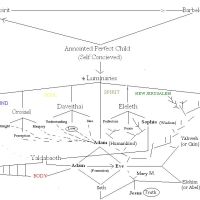
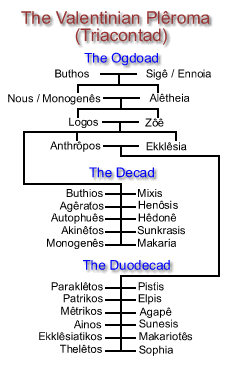
Hegel’s ”Vorlesungen über die Geschichte der Philosophie ii ,” (Theorie Werkausgabe, Bd. 19), Frankfurt a.M., Suhrkamp Verlag, 1977, 426-430] ( See also; Pleroma.) The first ten aeons in the Valentinian schema are, Bythios (Profound) and Mixis (Mixture), Ageratos (Never old) and Henosis (Union), Autophyes (Essential nature) and Hedone (Pleasure), Acinetos (Immoveable) and Syncrasis (Commixture,) Monogenes (Only-begotten) and Macaria (Happiness). http://www.wbenjamin.org/hegel_kabbalah.html

Demiurge: Meaning ‘Creator’ in Greek. Thought to be the “Craftsman” or creator of the material world. (Heracleon) In Orthodox thought this is a supernatural entity or force, such as the appearance of God to Moses. In the Gnostic schema the Word refers to an order, and it may be a natural sort of intelligent design, related to wisdom, the earthly or kenomic state of the higher wisdom, or form from the Pleroma. The material state is considered less than the Pleromic, and highly flawed. Archons seem to be emanations from the Demiurge process, much like other emanations from the Pleroma. (See; Pleroma, Kenoma, Archon.)

http://magdelene.wordpress.com/2008/01/08/the-demiurge/


Echmoth: (Echamoth) Meaning a form of wisdom; “Echamoth is one thing and Echmoth, another. Echamoth is Wisdom simply, but (e) Echmoth is the Wisdom of death, which is the one who knows death, which is called “the little Wisdom”. (”Gospel of Phillip, NHL.)
“full participation in divinity which is humankind’s true beatitude and the destiny of human life”

–Thomas Aquinas

…………

At least one circumstance emerges from this statement that is widely overlooked in America. In Europe “Gnosis” and “Gnosticism” are almost always used interchangeably. The suggestion that term “gnosis” ought to be used to describe a state of consciousness, while “Gnosticism” should denote the Gnostic system, has never caught on. The use of such classical Gnosticism of Valentinus, Basilides, et al., persists in European literature, including the writings of such scholars as Gilles Quispel, Kurt Rudolph, and Giovanni Filoramo (to mention some of the most recent ones). It is true that the late Robert McLachlan put forth a proposal to use these terms otherwise, but current usage in Europe has not followed it.

It is evident that a word used in such contradictory ways has lost its meaning. No wonder GNOSIS writer Charles Coulombe despairs over the situation when writing recently in a Catholic publication:

In reality, “Gnosticism,” like “Protestantism,” is a word that has lost most of its meaning. Just as we would need to know whether a “Protestant” writer is Calvinist, Lutheran, Anabaptist, or whatever in order to evaluate him properly, so too the “Gnostic” must be identified.

        http://www.gnosis.org/whatisgnostic.htm

……………………………..


Russian Orthodox icon of the Transfiguration (Theophanes the Greek, ca. 1408).

Russian Orthodox icon of the Transfiguration (Theophanes the Greek, ca. 1408).

Gnosis: While the literal translation for this word is “knowledge”, it’s meaning is closer to “insight” or, to use another concept, “enlightenment.” It may imply more in some cases than a purely intellectual understanding. It may imply complete comprehension that comes from both rational and intuited means. Gnosis is bonding the soul (nous) with wisdom, in both Sethian,Valentinian, and other Gnostic schema, which link this act through Jesus. The process of Gnosis may have different schema, or criteria as to secular practices. The process of Gnosis seems to be transitional or a transcendence in a learned process.

Gnostic: A person regarded as a student of Gnosis. Can refer to specific sects mentioned by historians, and heresiologists, The term can be used as a category for a number of sects and individuals that believed “Gnosis” had a salvational purpose. Gnostic sects are known to have existed in pre-Christian Jewish
communities and later in Christian movements, according to information in the “Nag Hammadi” text by Robinson. Gnostic views differ, as do secular characters of the Pleroma in the creation myths. The term or versions of it, are used very early in regard to Christian learning, this quote from Book 3 of Clement of
Alexandria’s “Stromata.” “Joannis autem vitae institutum gnosticum quis imitabitur?”

Gnosticism: The word was adapted by modern scholars to refer to the sects of the ‘Late Antiquities’ that shared a similar cosmology and soteriology. More recently the definition has been widened in some circles to mean any form of mysticism or esotericism. Gnostic scenarios both differ, and are alike in the
cosmic reasoning for the creation, making them ‘creation myths.’ Gnostic texts use different names for the characters of the creation stories for characters from the Palermo. Gnostics all believe that man, through learning the perspectives of his psyche, earthly, and pleromic self can attain life after death in a corporeal state by bonding with the higher entities. The ‘Light,’ ‘ Sophia,’ (Wisdom). (See also; ”The
Five Gospels,” by Funk, Hoover, Harpper-Collins, 1993, p. 544.)

Saunder’s Gnostic Glossary

………………..

Jesus saw some babies nursing. He said to his disciples, “These nursing babies are like those who enter the (Father’s) kingdom.”

They said to him, “Then shall we enter the (Father’s) kingdom as babies?”

Jesus said to them, “When you make the two into one, and when you make the inner like the outer and the outer like the inner, and the upper like the lower, and when you make male and female into a single one, so that the male will not be male nor the female be female, when you make eyes in place of an eye, a hand in place of a hand, a foot in place of a foot, an image in place of an image, then you will enter [the kingdom].”

–Gospel of Thomas (22)

……………..

The slave seeks only to be free, but he does not hope to acquire the estate of his master. But the son is not only a son but lays claim to the inheritance of the father. Those who are heirs to the dead are themselves dead, and they inherit the dead. Those who are heirs to what is living are alive, and they are heirs to both what is living and the dead. The dead are heirs to nothing. For how can he who is dead inherit? If he who is dead inherits what is living he will not die, but he who is dead will live even more.

A Gentile does not die, for he has never lived in order that he may die. He who has believed in the truth has found life, and this one is in danger of dying, for he is alive. Since Christ came, the world has been created, the cities adorned, the dead carried out. When we were Hebrews, we were orphans and had only our mother, but when we became Christians, we had both father and mother.

God is a dyer. As the good dyes, which are called “true”, dissolve with the things dyed in them, so it is with those whom God has dyed. Since his dyes are immortal, they become immortal by means of his colors. Now God dips what he dips in water.

It is not possible for anyone to see anything of the things that actually exist unless he becomes like them. This is not the way with man in the world: he sees the sun without being a sun; and he sees the heaven and the earth and all other things, but he is not these things. This is quite in keeping with the truth. But you saw something of that place, and you became those things. You saw the Spirit, you became spirit. You saw Christ, you became Christ. You saw the Father, you shall become Father. So in this place you see everything and do not see yourself, but in that place you do see yourself – and what you see you shall become.

Faith receives, love gives. No one will be able to receive without faith. No one will be able to give without love. Because of this, in order that we may indeed receive, we believe, and in order that we may love, we give, since if one gives without love, he has no profit from what he has given. He who has received something other than the Lord is still a Hebrew.

–The Gospel of Philip

………………

Archimandrite George has been the Abbot of St. Gregorios Monastery since 1974. He is well known throughout the Orthodox world both as a theologian and spiritual father. He has written many books and articles on theology and the spiritual life. His works have been translated into many languages.

The idea of Theosis will be unfamiliar to the Western mind, although it is not a new concept to Christianity. When Christ said, “Repent, for the Kingdom of Heaven is at hand,” [1] this is a call to a life of Theosis.

Theosis is personal communion with God “face to face.” [2] To the Western mind, this idea may seem incomprehensible, even sacrilegious, but it derives unquestionably from Christ’s teachings. Jesus Christ was the fulfillment of the messianic dream of the Jewish race; [3] His mission to connect us with the Kingdom of God [4] a Kingdom not of this world. [5] When Jesus said, “You are gods,” [6] “be perfect, just as your Father in Heaven is perfect,” [7] or “the righteous will shine like the sun in the Kingdom of their Father,” [8] this is to be taken literally. For those who are interested, further Biblical evidence for this can be found in Leviticus 11:44-45; 20:7-8; Deuteronomy 18:13; Psalms 82:1,6; Romans 6:22; 1 Corinthians 3:16-17; 2 Peter 1:2-4.


The whole sacrificial tradition of Israel beginning with the sacrificial offering of Isaac reaches fulfillment in Jesus Christ. St. John the Baptist echoing Isaiah says, “Behold the Lamb of God who takes upon Himself the sins of the world.” [9] St. Paul has this in mind when he says, “If you are Christ’s, then you are descendants of Abraham, and heirs according to the promise,” [10] because “those who believe are children of Abraham.” [11] The name Israel, was given to Jacob by God as an expression of his fidelity. Later this name was inherited by his faithful descendants. This train of thought is expounded in the writings of St. Paul, where he blesses the Church as “the Israel of God;” [12] whilst elsewhere he wrestles with and is pained by his fellow Jews denial of their own Messiah, labeling them “Israel according to the flesh.” [13]

http://www.orthodoxinfo.com/general/theosis.aspx

………….

Theoria (Greek θεωρία) is Greek for contemplation or ‘the perception of beauty regarded as a moral faculty’ (OED). From within Eastern Orthodox theology it is the ‘vision’ and or the ‘seeing’ of God, as the experience of God, achieved by the pure of heart who are no longer subject to the afflictions of the passions. This affliction of the passions is caused by the knowledge of good and the knowledge the evil. Theoria is validated because God is in the Universe or material world, which is evidenced by the material world containing beauty. Theoria is obtained as a gift from the Holy Spirit to those who through partaking of the sacraments along with the observance of the commandments of God and ascetic practices (see also kenosis, Poustinia and schema) have achieved dispassion.[1]Theoria is closely tied to the ascetic form of contemplative prayer called hesychasm that in the Eastern Church can also encompass the Jesus Prayer or the Prayer of the Heart. Theoria is a faculty that develops along with and is intimately related to the process of theosis, considered (especially by the Eastern Orthodox church) to be the quintessential purpose and goal of Christianity. Theosis has three stages the first is called catharis or purification, the second theoria or illumination and finally theosis or deification.[2] The love of beauty (philokalia), transcending the love of wisdom (philosophy) manifests into the love of God (theophilos). Love of God as faith in God manifests as humility. Humility is above all else, the characteristic hallmark of the saints. Theoria and Theosis culminates into the Kingdom of God. Here humility as a saintly attribute is called sophia or Holy Wisdom. Humility not knowledge is the most critical component to mankind’s salvation.[3]

The word has its origin in the Greek language and is derived from the same root as the English word theory. Theoria is used to express the experience of life as “one who watches a play or activity”, the state of “being” is defined as spectator. Hence it means to focus one’s attention exclusively on one thing, Beauty and or God being the object of focus. The act of experiencing and or observing is through the nous or “eye of the soul” Matthew 6:22-6:34. Noesis as faith in God (action through faith and love for God), leads to truth through our contemplative faculties. This theory, or speculation, as action in faith and love for God, is then expressed famously as “Beauty shall Save the World”. This expression of the idea comes from a mystic or gnosiology perspective (rather than say, a scientific or cultural one),[

      http://en.wikipedia.org/wiki/Theoria

………………


This is the second stage of Theosis, called

“theoria,” in the course of which man, having

already been cleansed from the passions, is illumined

by the Holy Spirit, is made luminous

on the way to becoming deified. Theoria means

vision. Theoria of God means a vision of God.

To see God, he must be a deified man. Thus,

theoria of God also means Theosis.

Of course, when he has been thoroughly

cleansed and has offered himself entirely to

God, then he also receives the greatest experience

of divine Grace available to men, which,

according to the holy Fathers, is the vision of

the uncreated light of God. Those who are very

advanced in Theosis see this light, very few in

each generation. God’s Saints see it and appear

within it, and, incidentally, this is what the halos

in the holy icons show us.

For example, in the life of St. Basil the Great,

it is said that when St. Basil was praying in his

cell, those who were able to see him saw that he

himself, and even his cell, were shining within

this uncreated light of God, the light of divine

Grace. In the lives of many of the New-Martyrs

of our Faith we read that, after horrible tortures,

when the Turks hung their bodies in the squares

of the town to intimidate other Christians, on

many nights a light appeared around them. It

shone so clearly and brightly that, because in

this way the truth of our Faith was so brilliantly

revealed, the occupiers ordered them taken

down so that they would not be ashamed before

the Christians, who saw how God glorified His

holy Martyrs.

The Grace of Theosis preserves the bodies

of the Saints incorruptible, and these are the

holy relics which exude myrrh and work miracles.

As St. Gregory Palamas says, the Grace of

God, having first united with the psyches of the

Saints, afterwards shrouds their holy bodies and

fills these too with Grace: not only their bodies,

but also their graves, their icons, and their

Churches. Here is the reason why we venerate

and kiss the icons, the holy relics, the graves,

and the Churches of the Saints. Through Theosis,

all these have something of the Grace of

God which the Saint had in his psyche because

of his union with God.

Therefore, in the Church, we enjoy the Grace

of Theosis not only with our psyche, but also

with our body, because as the temple of the Holy

Spirit Who dwells in it, and shares its struggles

with the psyche, the body is surely glorified.

The Grace springing from the holy Lord

–the God-Man Christ– is poured out into our

Panagia, into the Saints, and it also comes to

those of us who are humble.

It is certainly worth noting that the experiences

of the Christian are not always experiences

of Theosis and so spiritual. Many people

have been deluded by demonic or psychological

experiences. In order that there is no danger of

delusion and no demonic influence, all of this

must be humbly mentioned to the Spiritual

Father, who, illumined by God, will discern

whether these experiences are genuine or not,

and he will give appropriate direction to the

psyche who is confessing. Generally, our obedience

to the Spiritual Father is one of the most

basic points of our spiritual path. Through it we

acquire an ecclesiastical spirit of discipleship in

Christ by which the legitimacy of our exertion

is confirmed in order to guide us towards union

with God.

Within the Church, a special domain of Theosis

is monasticism, where the monks, having

been sanctified, receive high experiences of

union with God.

Many of the monks who experience Theosis

and sanctification also help the whole Church,

for, as we Christians believe following the agelong

holy Tradition of the Church, the struggle

of the monks has a positive effect on the life of

every struggling faithful in the world. In our

Orthodoxy, the people of God have great reverence

for Monasticism because of this.

After all, in the Church we partake in the

communion of the Saints, and experience the

joy of union with Christ. By this we mean that

within the Church we are not isolated members

but a unity, a brotherhood, a fraternal community

– not only among ourselves, but also with

the Saints of God, those who are living on earth

today and those who have passed away. Not

even at death are Christians divided. Death is

unable to separate Christians because they are

all united in the resurrected body of Christ.

http://www.orthodoxinfo.com/general/theosis-english.pdf

……..

Man, according to the scriptures, is created in the “likeness” and “image” of God (Gen 1:26-27).

To be like God, through the gift of God, is the essence of man’s being and life. In the scriptures it says that God breathed into man, the “breath (or spirit) of life” (Gen 2:7). This teaching has given rise to the understanding in the Orthodox Church that man cannot be truly human, truly himself, without the Spirit of God.

The image of God signifies man’s free will, his reason, his sense of moral responsibility, everything, which marks man out from the animal creation and makes him a person. But the image means more than that. It means that we are God’s ‘offspring’ (Acts 27:28), his kin; it means that between us and him there is a point of contact, an essential similarity. The gulf between creature and Creator is not impassable, for because we are in God’s image we can know God and have communion with him.

Fall of man

The story of creation, and specifically of Adam and Eve, tells of the goodness of all things that exist, and the superiority of man over other beings. It shows how the origin of evil does not lie in God but in his most perfect creature whose free act of sin brought wickedness and death to the world, how man lost the “likeness” of God, his response to God’s love.

The Church teaches that when we do not respond to God’s love, we are diminished as human beings. The act of faith that he asks of us is not so very different from the faith and trust we place in those people who surround us. When we do not respond to the love given us by the people who love us, we become shallow and hardened individuals.

Prophets

Since man still was of God’s image, the search for meaning was as critical for human existence as are air and water. Creation itself, as the handiwork of God pointed to him. Yet, before the coming of Christ, the meaning of the world and our place in it remained difficult to understand. People created stories to help themselves explain the great mystery of their own existence, the world around them, and the one who was responsible for bringing them into being. Yet, knowledge of the true God eluded them. The Holy Scriptures speak of this lack of knowledge as darkness. So God sent messengers to speak for him, holy men and women through whom he worked wonders, prophets to announce the coming salvation. Finally, God sent his own Son, Jesus Christ. When he came, the very one who had created the world was now clearly made known to the world, giving light to those who had been sitting in darkness.

http://orthodoxwiki.org/Soteriology

………….

Salvation is the goal of Christianity, and the purpose of the Church. The theology of salvation is called soteriology. Orthodox Christianity strongly believes that God became man, so that man may become like God. This concept of theosis, rejects that salvation is a positive result to a legalistic dilemma, but a healing process. Orthodoxy views our inclination to sin as a symptom of a malady that needs treatment, not just a transgression that requires retribution. One of the distinctive characteristics of Orthodox Christian thinking is that it sees the Gospel message not as law, but as relationship. It speaks of the mystery of the Holy Trinity in terms of the relationship of love that exists among them. To join in that love is the work that will lead to salvation.

http://orthodoxwiki.org/Soteriology

…………

Theosis (“deification,” “divinization”) is the process of a worshiper becoming free of hamártía (“missing the mark”), being united with God, beginning in this life and later consummated in bodily resurrection. For Orthodox Christians, Théōsis (see 2 Pet. 1:4) is salvation. Théōsis assumes that humans from the beginning are made to share in the Life or Nature of the all-holy Trinity. Therefore, an infant or an adult worshiper is saved from the state of unholiness (hamartía — which is not to be confused with hamártēma “sin”) for participation in the Life (zōé, not simply bíos) of the Trinity — which is everlasting.

This is not to be confused with the heretical (apothéōsis) – “Deification in God’s Essence“, which is imparticipable.

http://orthodoxwiki.org/Theosis


……………


All religions, all Yogas, may be paths to lead us closer to Him who is the only One through whom all was created, the Christ. Jesus was the manifestation in human form of the limitless Christ of God.

There is no separation in God. The forces which promote separation, selfishness and egotism should not be feared, for nothing can hinder the plan of God, nor prevent its fulfillment. Love alone shall be our protection. Where there is love there is unity, there is the Christ.

When Christ returns, He will be as the fulfillment of each individual soul potential, and the unified consciousness and loving brotherhood of all mankind. No differences of language, race or even religion can separate us then, as we are all One in? Him, and we will realize this in all fullness. Meanwhile we should realize that no man is our enemy! The only enemy is the sense of limitation which divides us from Him and each other.

All this shall pass away as the Consciousness of the whole race is lifted into a larger awareness of God. We grow toward this by letting go of our limited conceptions, and opening up to the universal Christ-Love, by allowing His Love to flow through us to all mankind.

This I believe.

Some musings of my own from a discussion board…..

………

I can see the gnostic side of wicca in the sense that it is experience of the divine…of a kind

but then some would argue Wicca largely deals with what is often called the astral plane….

this “perhaps” is the mythic realm as mentioned in other threads…. the thing is there is “more beyond” the astral plane…

the astral plane and wicca if we look to kabbalah deals with malkuth the kingdom and yesod the foundation…LARGELY

as do most forms of magick….. perhaps it is no co-incidence that yesod is often associated with the groin.

Of course some forms of magick go beyond yesod, hermetic strains tend to proudly announce their allegiance to Hod or mercury/Hermes….
here we get the attempt of marriage between Hod and Netzach…. Hermes Ahphrodite… leading upwards to Tifferet, the sun….

Jesus the solar sun god savior being personage….
In fact many “paths” stop here…. why go further? lol shucks …..

But of course there is more above the 6th emanation….

so we fall into the trap of self transformation….

as the Sufi say there are two steps… the passing out of the self…which s where many stop, this is to gain gnosis, to know that I am 5 part being…that I am physical and I am a part of the astral… the 5 elements.

the second sufi step is union with the friend…..or to become the grail again…to JOIN….

magick has been mentioned is largely about ritual, ritual is helpful for some..but like religion, like eating soup with a spoon, once the job is done its time to drop it….. before one is devoted to the ritual and not God……

In fact one of the paradoxical secrets of magick is there is no magick.
Essentially the goal of magick is to not use magick…

when we look for a secret formula we are lost..as thomas clearly states.
Of course ask the vast majority of magick users today and they will laugh in your face,

mainly because they are too busy doing magick to realise they dont need to do magick in order to do magick….

essentially this is largely like:

“to be a Buddhist you must not be a Buddhist.”

Of course it is far deeper than this, in that it is not merely saying you must not be a follower, you must do your own thing…
but that you don’t need a magick decoder ring in order to jump tall buildings…. you already can jump tall buildings….

“I gained nothing at all from supreme enlightenment
It is for this very reason it is called supreme enlightenment”

I gained nothing at all…so the Buddha again is telling us here, we have it all….. thus the goal of magick is to not do magick at all…so one could ask why do magick at all? mmmm your choice…

I gained nothing at all….well, I…. I gained nothing at all….the I, the ego gained nothing at all from supreme enlightenment… here Buddha is also telling us I has nothing to gain…..at least that is one view…

Of course I am rambling

to go full circle….
Wicca, correct me if I am wrong, does not deal with divine union….
yes there is communion, channeling the gods, goddesses… this is relatively “easy” so to speak, again as its a part of the astral plane….
Wicca also really, despite the attempts by some, does not have a place for a savior christ figure…. as christ is the 3rd…. male and female combined…both and yet neither…..

So arguably Gnosis… “higher gnosis” for want of a better term ….. is seeking that da’ath…. and beyond….which some will again tell you is impossible..but Gnostics would argue it is not…

rambling..sorry….

maybe coherant lol

just my thoughts

I declare to you, brothers, that flesh and blood cannot inherit the kingdom of God, nor does the perishable inherit the imperishable.

Listen, I tell you a mystery: We will not all sleep, but we will all be changed— in a flash, in the twinkling of an eye, at the last trumpet. For the trumpet will sound, the dead will be raised imperishable, and we will be changed. For the perishable must clothe itself with the imperishable, and the mortal with immortality. When the perishable has been clothed with the imperishable, and the mortal with immortality, then the saying that is written will come true: “Death has been swallowed up in victory.”

1 corinthians 15:50-54

……

Now after we had first washed ourselves out of the fountain, and every man had taken a draught out of an entirely golden cup, we were once again to follow the Virgin into the hall, and there put on new apparel, which was all of cloth of gold gloriously set out with flowers. There was also given to everyone another Golden Fleece, which was set about with precious stones, and various workmanship according to the utmost skill of each artificer. On it hung a weighty medal of gold, on which were figured the sun and moon in opposition; but on the other side stood this saying,

“The light of the moon

shall be as the light of the sun,

and the light of the sun

shall be seven times lighter

than at present.”

But our former jewels were laid in a little casket, and committed to one of the waiters.

–Chemical Wedding of Christian Rosenkreutz (Day 4, http://www.levity.com/alchemy/chymwed4.html )

….

Some people are afraid that they may arise from the dead naked, and so they want to arise in flesh. They do not know that it is those who wear the [flesh] who are naked. Those who are [able] to take it off are not naked.

[Flesh and blood will] not inherit God’s kingdom.” What is this flesh that will not inherit? It is what we are wearing. And what is this flesh that will inherit? It is the flesh and blood of Jesus.

For this reason he said, “One who does not eat my flesh and drink my blood does not have life within.” What does this mean? His flesh is the word and his blood is the Holy Spirit. Whoever has received these has food, drink, and clothing.

And I also disagree with others who say that the flesh will not arise. Both views are wrong. You say that the flesh will not arise? Then tell me what will arise, so we may salute you. You say it is the spirit in the flesh, and also the light in the flesh? But what is in the flesh is the word, and what you are talking about is nothing other than flesh. It is necessary to arise in this sort of flesh, since everything exists in it.

In this world those who wear clothes are superior to the clothes. In heaven’s kingdom the clothes are superior to those who wear them.

Gospel of Philip

………….

Let us first consider the nature of the candidate who has entered the Fourth Day.

The soul-rose, the central heart of the microcosm, is entirely open. The Alchimia, the new, pure astral substance which cannot be explained from the nature of death, has spread throughout the respiration field. The seven weights have been stored in their places, which means that the primary aspects of the Seven-Spirit are illumining the seven cerebral cavities in a new way and have thus ignited the seven-branched candelabrum.

Now the candidate is equipped for the beginning of the wed­ding feast. This equipment is truly miraculous, and with it one will certainly be able to enter the highest aspect of the Living Body of the young gnostic Brotherhood, the Golden Head, the field of the resurrection. But even this equipment is not sufficient for one to be able to ascend the royal spiral staircase, or in other words, to perform practical work as a participant in the Golden Head.

That is why The Alchemical Wedding speaks of an entirely new garment and new adornments of the golden fleece. Perhaps you will have realised that these things draw attention to several new aspects and activities that must be brought to life in the candidate. To understand this you need to be aware that three beings must be brought together in the great process of transfiguration, beings which, at least in the beginning, are sharply to be distinguished from each other. These are: the spirit, the soul, and the body of the personality.

The body is nature-born, from nature-born parents. The soul has arisen from the awakened microcosm. And the spirit comes from outside; it originates neither from the nature of death nor from the microcosm. These three must be made into one.

The unification of spirit and soul would not be so difficult, but what is essential for both is to become united with the personality, the fourfold body, which is an alchemical necessity. The fourfold personality, however, is not fit to enter this threefold unification just as it is. The initial work has been brought to a good end. There is. indeed, a basic understanding. The three are bending towards each other. But the process must reach further, much further than that. That is why, as he progresses in this work, the candidate must put on new garments from time to time and participate in what, to us, seem rather strange changes of clothing. As you will under­stand, these garments have nothing to do with outer clothing. To understand what clothing is meant here, you will need to bear in mind that Alchimia, the new microcosmic astral field, exerts a powerful influence on the candidate of the Fourth Day.

We have said many times that this new astral field differs entirely in essence and vibration from the astral part of the nature-born personality. Its light-power is much stronger and of a much higher vibration, and it therefore has a powerful influence on the entire personality. We have also told you that the seven “weights” are stored in the seven cerebral cavities, or in other words: the fiery elixir that fills the seven cerebral cavities is totally transformed in nature and essence. The result is that, because of the activity of that very much higher light-power in the nature-born personality, a ‘”new thirst” comes into being. Because of it, the candidate has to drink from the font of the living water. Inwardly, he is no longer able to refrain from doing so.

The Alchemical Wedding of Christian Rosycross Part 2 (J. Van Rijckenborgh)

….

He [took] Judas, Matthew and Mary [to show them the final] consummation of heaven and Earth, and when he placed his [hand] on them, they hoped that they might [see] it. Judas gazed up and saw a region of great height, and he saw the region of the great abyss below.

Judas said to Matthew, “Brother, who can ascend to such a height or descend abyss below? For there is great fire there, and great terror.”

At that moment a word ” issued from the height. As Judas was standing there, ” how the word came [down].

He asked the word, “Why have you come down?”

The Son of Humanity greeted them and said to them, “A seed from a power efieient, and it descended to the earth’s abyss. The Majesty remembered [it] and sent the [word to] it. The word brought the seed up into [the presence] of the Majesty, so that the first word might not be lost.”

[H is] disciples marveled at everything he told them, and they accepted all of it in faith. And they understood that it was no longer necessary to keep an eye on evil.

Then he said to his disciples, “Didn’t I tell you that, like a visible flash of thunder and lightning, what is good will be taken up to the light?”

All his disciples praised him and said, “Master, before you appeared here, who was there to praise you, for all praises are because of you? Or who was there to bless [you], for all blessing comes from you?”

,As they were standing there, he saw two spirits bringing a single soul with them, and there was a great flash of lightning. A word came from the Son of Humanity saying, “Give them their garments,” and the small became like the great. They were [like] those who were received up; [there was no distinction] among them.

The [words] he [spoke convinced the] disciples.

The Dialogue of the Savior

On garments clothing the soul, and on putting on perfect humanity as a garment , cf. Gospel of Mary 15, 18. On garments of light and life given to those who enter the bridal chamber cf. Dialogue of the savior 138-39

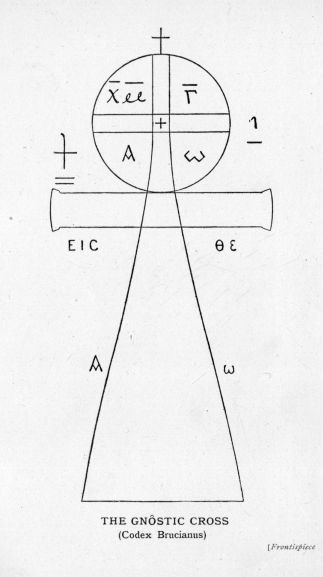
Garment: (Vesture) Meaning clothing, but in Gnostic terms can mean the flesh covering the body. Sometimes used in various references to wearing the soul or the idea of social position as a philosophical covering. From the Un-named text in the Bruce Codex: “This is Man, begotten of mind (nous) ‘, to whom thought gave form. It is thou who hast given all things to Man. And he has worn them like garment.”

”Chelkeach, who is my garment, who has come from the Astonishment, who was in the cloud of the Hymen which appeared, as a trimorphic cloud. Ane Chelkea is my garment which has two forms, he who was in the cloud of Silence. And Chelke is my garment which was given him from every region; it was given him in a single form from the greatness, he who was in the cloud of the middle region and the star of the Light which surpassed the thought and the testimony of those who bear witness.” (”The Paraphrase of Shem.”)

I’ve just finished a draft of an academic paper on the Christian Monadology. It is a paper I have studied many years to be able to write. I have contended for some time that if I could show not only the lineage of the Gnostics but their epistemology common to that lineage, then I could show lots more, precisely the basis for the Gnostic Christianity.

In order to show this lineage I needed a ”fingerprint” I could trace through the centuries that links first century Christians with 2nd, 3rd, and 4th centuries. The Aeonology and the use of the Monad has shown just that….

“Meade links Simon Magus with the study of the Monad, by linking the Aeonology, and the concept of the ‘monadic morphism’ known in the mathematical equation, (4) is expressed consistently with Nag Hammadi discoveries. Meade describes the Aeonology which is consistent with Valentinian descriptions Meade did not have.

“In his Aeonology, Simon, like other Gnostic teachers, begins with the Word, the Logos, which springs up from the Depths of the Unknown-Invisible, Incomprehensible Silence. It is true that he does not so name the Great Power, He who has stood, stands and will stand; but that which comes forth from Silence is Speech, and the idea is the same whatever the terminology employed may be.

The Word, then, issuing from Silence is first a Monad, then a Duad, a Triad and a Hebdomad. For no sooner has differentiation commenced in it, and it passes from the state of Oneness, than the Duadic and Triadic state immediately supervene, arising, so to say, simultaneously in the mind, for the mind cannot rest on Duality, but is forced by a law of its nature to rest only on the joint emanation of the Two. Thus the first natural resting point is the Trinity. The next is the Hebdomad” (G.R.S. Meade on Simon Magus)

Compare the Aeonology of the description above to that of Valentinus from ”A Valentinian Exposition.” A text discovered after Meade’s work. The passage confirms Meade’s basic assertion of the Aeonology.

“… I will speak my mystery to those who are mine and to those who will be mine. Moreover it is these who have known him who is, the Father, that is, the Root of the All, the Ineffable One who dwells in the Monad. He dwells alone in silence, and silence is tranquility since, after all, he was a Monad and no one was before him. He dwells in the Dyad and in the Pair, and his Pair is Silence. And he possessed the All dwelling within him. And as for Intention and Persistence, Love and Permanence, they are indeed unbegotten.” (“A Valentinian Exposition.”)

Clearly, the descriptions are of the same phenomena and epistemology. This shows the lineage of this philosophy from Simon (30′s C.E.) to Valentinus, (180 A.D.) a span of time from the first century Gnostics of Simon to the Valentinian Gnostics into the third century. (See also the passages about the Monad from “Eugnostos The Blessed,” see below.)”

I’ve been collecting the passages for years that could make this link from the first century to the fourth. There is far more than linking Simon Magus and Valentinus, I can link every known Alexandrian Gnostic to the Monadic system, and do in the paper I mention.

I’ll include the references from this paper below. The paper itself is very long, that is because it has to show parallels to a whole system. The meat and potatoes of the work is it shows a lineage of the Monadology straight from John the Baptist through Origen. Its non refutable, the claims are made on prima facie literary parallels, like the one’s above. All the references are very reliable. Here are my conclusions…

Conclusion:

The study of the Monad is inherent in the understanding of Christian Gnosticism, to reveal the metaphysics, epistemology, and the nature of the Word, in the Gnostic Aeonology. The study of this phenomena can be traced through the entire lineage of Christian Apostles, their attributed written works, and the works known followers in the historical lineage of the Alexandrian Church.

Sethian Gnosticism can be qualified as that Gnosticism adopted by pre-Christian Jews and the known followers of John the Baptist. They exemplified Seth as pure, and viable as a Monadic icon, in the Aeonology.

Christian (Sethian) Gnosticism can be qualified as the philosophy (Secret Christianity) were Jesus occupies the Monadic form as a type, just like Meade’s account of Simon’s “Great Power.” In effect, Christianity in the Gnostic sense started when the followers of John the Baptist adopted Jesus as the Monad, and the primary emanation from the void, Silence.

References:

1. “Fragments of a Faith Forgotten,” by G.R.S. Mead, (available in the Nag Hammadi
Library, online.)

2. “Simon Magus,” by G.R. S. Meade, (NHL online, see ‘archives.’)
http://www.gnosis.org/library/grs-mead/grsm_simon_magus.htm

3. “The History of Chinese Philosophy,” Vol. 1.,2., by Fung Yu-Lan, Princeton, 1953. ( Compares and identifies some aspects of Pythagorean theory with the Tai Chi.)

Note: Fung Yu-Lan and other sources describe the kenosis and mechanics of the Tai Chi almost exactly like the passage from ”Eugnostos The Blessed.” The literary parallels in Chinese philosophy includes the emanation of the triad. The following are from Fung Yu-Lan.

a.) “Wu Chi {The Great Void} creates Tai Chi, Tai Chi is the one Chi. One Chi
generates Yin and Yang, and Yin and Yang can change in infinite ways.” (From
“The History of Chinese Philosophy,” Fung Yu-Lan, Princeton Press, 1953.)

b.) ” Tao produced oneness. Oneness produced duality, Duality evolved into the
ten thousand things. The ten thousand things support the yin, and embrace the
yang. It is the blending of the breaths (of yin and yang) that their harmony
depends.” ( from “Lau Tzu,” or the “Tao Te Ching” sixth c. B.C. ).Ibid, Fung
Yu-Lan) There are other Chinese descriptions which include the triad in the
sequence.

4. The Monad


The Monad, and Transmutations

Mathematical Monad……(Extended study by The Catsters)


{Natural transformations, See also Klein Jars}

5. “The Nag Hammadi Library,” Robinson, Harper, 1990. (available online)
See also the ”Bruce Codex.”

6.”Early Greek Philosophy,” Barnes, Penguin Classics, 2001. (Contains chapters on
Pythagoreans) and Aristotle’s passage seen above.

7. “Great Thinkers of the Eastern World,” McGreal, Harper, 1995. (Defines heuristic devices, and describes related material to the Tai Chi philosophy.)

Further Reading:

Gnostic Secrets of the Nassenes,” by Gaffney, Inner Traditions, (2004). Text contains “The
Refutation of All Heresies,” Book 5.

The History of the Church,” by Eusebius, Penguin Classic, (1965)

The Jesus Sutras” by Martin Palmer, Ballentine, 2001. (Contains Christian
scripture based upon the classical Buddhist/Taoist use of the Tai Chi, to
represent Jesus as spirit.) The text also identifies the five skhandas of the Soul,
“Form, Perception, Consciousness, Action, Knowledge.”

Xing Yi Quan Xue,” by Tang, Unique Publications, 2000. (See page 80. for a
breakdown explanation of the Tai Chi icon.)

Chinese Martial Arts Training Manuals,” by Kennedy/Guo, North Atlantic Books,
2005. (See page 86. for the ‘Ba Gua’ sequence composed by Sun Xi Kun.) This paradigm
shows the morphism of the Tai Chi, into Ba Gua sequences. This parallels the Pythagorean
model of the morphism in Oneness.

By Tom Saunders

The “Hylic”, corresponds to “Hyle” or gross manifestation, and is
represented by individuals who see nothing beyond “form”, or material
existence.

Hylic: “Of matter.” Can be thought of as a level of thinking, dealing with the lowest portion of human nature. It is considered living by instinctual drives with no sublimation. Hylics, choikus, sarkics, etc. are said to be below ‘Psychics’ which are below ‘Gnostokoi,’ the highest order of transcendence
according to Valentinian and other Gnostic teaching. The world of the psychic, is still in the realm of the hylics in most Gnostic scenarios because existence in the earthly state separates one from the pleroma. (See; Psychic, Kenoma. Pleroma.)

The “Psychic”, corresponds to the mental order, and constitutes in
man, individuals who see little or nothing beyond subtle
manifestation, and consider discurisve reasoning alone as the key
to spiritual knowledge.  Unlike the “Hylic”, they are at least aware
of something beyond form, but usually do not possess the
qualifications needed to actually experience it–which usually ends
up in a denial that anything experiencial (while in corporeal mode),
can be realized.  This use of “psychic” here, does not mean how
popular culture uses the term “a psychic”…although, psychism, IS a
prolongation of the mentality, which should serve as food for
thought.

Psychic: This level of thinking is the one right above “hylic,” and below
‘Pneumatophoroi’ It’s drive is the intellect, or normal understanding of the
mind. While alive in the earthly state, the psychic remains as a hylic. (See
also Hoeller, p. 110) ”Mankind came to be in three essential types, the
spiritual, the psychic, and the material, conforming to the triple disposition
of the Logos, from which were brought forth the material ones and the psychic
ones and the spiritual ones.” (”Tripartite Tractate”) ”…even Valentine
{Valentinus} teaches that Christ’s body was Psychic.” (”Stromata,” Book 3.)

Finally, the “Pneumatics”, correspond with “Pneuma”, the spiritual
“breath”, the spiritual order.  These are the Gnostic Initiates,
those who go beyond mentality/consciousness, and all modes related to
the individuality.  That which concerns Pneumatics, is as different
from the psychics, and the psychics from the hylics.

Pneumatic: One who identifies with the spirit (pneuma), beyond that of the
physical (hylic) world and the intellect alone (psychic). The pneuma, described
in the ”Gospel of Phillip,” as ‘breath,’ refers to bonding with the internal
spark (splinter) that came from and is drawn to reunite with the Father in some
Gnostic schema. One who awakens it (the spinther) within the self does it
through the process of gnosis. (See; Gregory of Nicea (Basil), who used the term
in his mystical teachings, and is a later term which connotes Gnostic. See;
Early Christian Mystics,” McGinn, Crossroads, 2003.)

But creatures remain untouchable, inviolable. If God wants you to suffer a little, He allows you to learn just how inviolable they are. As soon as you try to possess their goodness for its own sake, all that is sweet in them becomes bitter to you, all that is beautiful, ugly. Everything you love sickens you. And at the same time your need to love something, somebody, increases a hundred times over. And God, Who is the only one who can be loved for His own sake alone, remains invisible and imaginable and untouchable, beyond everything else that exists.”


Thomas Merton


……..

The Kingdom of Heaven is within you –the immortal words of Christ do not pertain exclusively to the patristic formulae of salvation through sacrament, nor do they point only to the mystical body itself as unitive and unifying salvation. Rather, the observation is most profound or religious truths, akin to the shahadatyn themselves, the depth of micrcosmic reality, the height of human possibility. Above the kataphatic lies the apophatic, and This is unapproachable, impenetrable. But the kataphatic is a Reality humanity mirrors, when cleansed of unnecessary and delimiting contingency.


–Ahson Azmat (Extract from: Between Kaf and Nun: Rings, Gardens, Cosmos and Imago Terrae: Towards an explanation of Sacred Tome and Space, found in Sophia vol 12, no1)

http://www.sophiajournal.com/

……

It is for this reason that the highest form of Gnostic spiritual writing, the highest and most challenging and most frustrating in many ways for the reader, is the apophatic/kataphatic contestation, of which the finest and purest example is found in Thunder Perfect Mind.

For I am knowledge and ignorance.
I am shame and boldness.
I am shameless; I am ashamed.
I am strength and I am fear.
I am war and peace.
Give heed to me.
I am the one who is disgraced and the great one.


It is only slightly, I would say, trailed behind by the Gospel of Philip itself. It holds the famous statement of Gnostic apophatic declaration:

Light and Darkness, life and death, right and left, are brothers and sisters of one another. They are inseparable. Because of this neither are the good good, nor evil evil, nor is life life, nor death death. For this reason each one will dissolve into its earliest origin. But those who are exalted above the world are indissoluble, eternal.


Names given to the worldly are very deceptive, for they divert our thoughts from what is correct to what is incorrect. Thus one who hears the word “God” does not perceive what is correct, but perceives what is incorrect. So also with “the Father” and “the Son” and “the Holy Spirit” and “life” and “light” and “resurrection” and “the Church (Ekklesia)” and all the rest – people do not perceive what is correct but they perceive what is incorrect, unless they have come to know what is correct. The names which are heard are in the world [...] deceive. If they were in the spiritual realm, they would at no time be used as names in the world. Nor were they set among worldly things. They have an end in the spiritual realm.


What could be a better description of this philosophy than to say it is a prefiguring, written in the mythological and spiritualizing language of the first centuries of the Gnostic era, of the postmodern philosophy of Baudrillard’s simulacrum? I think it is also relevant for us to consider the warning of Max Horkheimer, the
Frankfurt School philosopher of the mid-twentieth century, that we as a society are advancing far faster technologically than we are in terms of our actual substantive enlightenment as human beings. There is a difference between the substance of reason in the sense of “reasonableness”, and the process of “rationalization” — but unfortunately we collapse the two into the concept of the “ratio.” Of course, Gnosticism has never allowed for such a collapse, because of its healthy skepticism about the ability of the ratio per se to provide the salvation of either the human person or of humanity as a whole. It is important for us to hold onto that skepticism. It is a skepticism that is not anti-scientific and anti-rationalistic per se. We are not talking about the kind of anti-scientistic frenzy that has taken hold of conservative Protestantism with its bizarre hatred of genuine scientific endeavor and progress. But we are talking about a recognition that our science and our technology is sometimes advancing well beyond our moral capacity to deal with that advancing process. This is why we face issues like cloning and stem-cell research on which human society seems to be incapable of engaging in real dialogue beyond shouting and screaming matches that actually jettison any kind of reasonable debate in favor of competing fundamentalisms. We can see that is a typical problem in many parts of human life today. We actually have competing fundamentalisms. One fundamentalism of the left, one of the right; one of the Christians, one of the anti-Christians; one of the sexually repressed, one of those who seem to have no sense of the need for any kind of sexual morality based on human diversity and respect for the individual’s sexual identity.

–Brother Matthew Oroborous (From Basilides to Baudrillard… )


………….

“The four elements stem from a single source element. This is alluded to in the verse, ‘and a river flows from Eden to water the Garden; from there it divides and becomes four major rivers.’ That is, there is a single source which divides into four — the four elements….. This source element is called the yesod hapashut, the ‘simple element,’ in that, at the source, everything is united as one, without differentiation.


Everything in the world is composed of four basic elements. Each element contains traces of all the others, even if only in microscopic proportion. Thus, domem (mineral) has ‘earth’ as its main component, but one can find traces of ‘water,’ ‘air’ and ‘fire’ within. The continued existence of the world is based upon the proper combination and interaction of these elements.


Each element is radically different in makeup from the others, yet God in His infinite wisdom created them in such a way that they could coexist and sustain life in an almost endless array of combinations — as long as that which they are sustaining is alive. When its ‘life’ ends, the elements disperse — creating a situation, conceptually, of the ‘World of Separation.’ Thus it is the life force that binds the disparate elements together so that man can exist…..


Although every person is made up of all four elements, there are four main roots, corresponding to the four letters of the Tetragrammaton (YHVH). Each individual is rooted in his particular letter more than all the others. Correspondingly, he is also rooted in the specific element and character trait that derives from that letter. This is what accounts for the tremendous differences we find in people’s temparents. Some temperaments are rooted in fire, some in air, some in earth, some in water. The main thing is to harmonize their differences, for when difference, rather than harmony, is stressed, strife becomes the norm and people resist and oppose each other. This strife reverberates into their root elements, causing disharmony Above. As a result, the world is visited with destruction and sickness.

The main controlling force which can harmonize these differences is found in the single source element, the Tzaddik, The Tzaddik knows how to establish a proper balance between the various elements in his domain. This brings harmony and peace to each individual and to humanity as a whole.”

— Nosson of Bratslav (Likutei Halachot)

………

Whoever is able to fulfill the first phase of the path, the phase of self-dissolution in the grace of the rose, and is able to break up the magnetic system of ordinary nature to which he is bound is immediately liberated. And although existentially still completely a nature being and so still in the world and within the system of the twelve aeons, such a person will no longer find any hindrance on account of this second sidereal birth. He has become a child of God. He has been freed of all ties forever.

- The Gnostic Mysteries of Pistis Sophia (Lectorium Rosicrucianum) 

…..

“O God, If I worship You for fear of Hell,

burn me in Hell without end.

And if I worship You in hope of Paradise,

Forbid it forever to me.


But if I worship You for You,
do not hold back from me Your everlasting Beauty.”


–Rabi a al-Basri (8th Cent Sufi Saint http://en.wikipedia.org/wiki/Rabi’a )


رابعة العدوية القيسية) or simply Rabiʿa al-Basri (717–801 C.E.) was a female muslim Sufi saint.

Rābiʻa al-ʻAdawiyya al-Qaysiyya (Arabic: رابعة العدوية القيسية) or simply Rabiʿa al-Basri (717–801 C.E.) was a female muslim Sufi saint.

…………………….


SHAHADATAIN: Bearing witness. In order to become a Muslim one must utter and believe in two Shahadas (Shahadatain): First Shahada: Ashhadu an la illa ill’allah. ( I bear witness that there is no deity worthy of worship except Allah.) Second Shahada: Ashhadu anna Muhammadar rasoolullah. (I bear witness that Muhammad is the Messenger of Allah.) The Shahadatain is the gateway to Islam and the gateway to the Garden. It is easy to say, but to act on it is a vast undertaking which has far-reaching consequenccs, in both inward awareness and outward action, in this world and in the next world.

http://www.islambasics.com/view.php?bkID=999999&chapter=19


Cataphatic theology describes God positively according to what He has revealed of Himself in Scripture and nature. It is usually discussed as the opposite of Apophatic (or negative) theology, which attempts to describe God only in terms of what He is not.

Negative theology, also known as Apophatic theology, is a theological approach that describes God by negation, speaking of God only in terms of what He is not (apophasis) rather than presuming to describe what God is.

In negative theology, it is maintained that we can never truly define God in words. In the end, the student must transcend words to understand the nature of the Divine. In this sense, negative theology is not a denial. Rather, it is an assertion that whatever the Divine may be, when we attempt to capture it in human words, we will inevitably fall short.

In contrast, making positive statements about the nature of God, which occurs in most other forms of Christian theology, is sometimes called cataphatic theology.

Negative theology played an important role early in the history of Christianity. Three theologians who emphasized the importance of negative theology to an orthodox understanding of God, were Gregory the Theologian, John Chrysostom, and Basil the Great. It was employed by John of Damascus when he wrote that positive statements about God reveal “not the nature, but the things around the nature.” It continues to be prominent in Eastern Orthodoxy (see Gregory Palamas) where apophatic statements are crucial to much of their theology, and is used to balance cataphatic theology.

O Lord of devotions, O lord of Prayers and hymns and good books , O Lord of prayer and praise, Hear my voice and condemn me not!

The Gnostic Prayerbook

“There are many levels of attention in prayer.  First of all, there is purely exterior attention.  We ‘say prayers’ with our lips, but our hearts are not following what we say although we think we would like to mean what we are saying.  If we do not cultivate something better than this, we will seldom really pray.”

–Thomas Merton

Keep It Short

by

Gershon Winkler

When Moses’ sister Miriam the Prophetess took ill, Moses prayed for her: “Please, O God, please heal her” (Numbers 12:13). The sages asked: “Why did Moses recite such a short prayer? Why did he not pray longer on her behalf? So that people would not say ‘His sister is suffering and he is standing there spending a lot of time praying.’ Another explanation: So that people would not say ‘For his sister he prays a lot, and for us he prays in brevity!’” (Talmud, Berachot 34a).

Does God enjoy lengthy prayer? Who knows? But the ancient rabbis were trying to point out that God’s first and primary will is that we take care of things here and now that need tending to, and not seek the escape from our life challenges by sheltering ourselves in religious practice and spiritual pursuits. So when Moses cried out his prayer at the Sea of Reeds, before he could even get the words out of his mouth God interrupted him and said: “Why are you yelling at me? Speak to the Children of Israel and get them moving!” (Exodus 14:15). The sages added: “Moses stood there and cried out his prayer, when the Blessed Holy One said, ‘Moses, this is not the time for lengthy prayer — the Israelites are in trouble!’”(Rashi on Exodus 14:15).

Prayer, we are taught, is a fine practice, and the more the merrier as it deepens one’s connection to Spirit, to the Mystery of all Mysteries. It is a spiritual practice that in the moment reminds one that there is more to existence than what is conspicuous, than what is at hand, than what is happening in the moment. And yet, at the same time if what is happening in the moment demands immediate attention, we are taught to keep our prayer very brief and tend to the matter at hand. Otherwise, we accustom ourselves to severing our consciousness of the physical universe from our consciousness of the spiritual universe, when the unification of the two realms is our primary task in this world. Each is inter-dependent on the other.

The second-century Rabbi Akiva used to keep his prayer short when he prayed in public so that the congregants wouldn’t have to wait and wait and wait until he finally completed a segment of the service. When he prayed alone, however, “one would find him first in one corner and by the end would find him in the opposite corner way on the other side of the room from all the lengthy and numerous bowing and movements and gesticulations” (Talmud, Berachot 31a). Even though his private practice involved deep and lengthy communion with the divine, when in public he did not forget that not everyone prays that deeply and lengthily and most, in fact, start getting a bit edgy, tired, bored out of their skulls. Maybe even hungry. And so he kept his devotion short when he prayed with the public.

The second-century Rabbi Yo’see recounts how he once stopped in the middle of a journey and entered a ruin to do the afternoon prayer. The spirit of Elijah the Prophet appeared outside the ruin and waited for the sage to finish, and then admonished him for interrupting his journey to pray, and for doing so in a ruin. “I learned three things from him,” he recounts. “That one ought not to enter a ruin [for danger of falling debris; others say because of the possible presence of negative spirits], that one prays even while on a journey, and that when one prays during a journey, one ought to keep it short” (Talmud, Berachot 3a).

Prayer, Elijah taught the sage, was nice and proper to do, even while walking, but don’t stop on the road to pray, keep walking, and don’t pray in a place where you might be endangered, and don’t overexert yourself by trying to pray and walk at the same time — so keep it short.

……..

May all be blessed, peaceful and happy,

May all be free of pain, resentment and fear.

May we have infinite gratitude, patience and compassion for all above, equal, and below us.

May we be the doctor, medicine and nurse, for all the confused, sick and sad. May all the virtue acquired by us, flow freely to all need.

May everyone find the Path to Peace,

May everyone become pure and perfect,

May everyone find the Treasury of Life!

May Kushta bless you and keep you . . . Amin

Good is the Good to the good, and They set their nature upon those who love their name.

We will seek and find, and will pray and be heard.

We have sought and found, we prayed and were heard in thy presence,

my Lord Yeshu and Maryam d-Hiya, Lords of Healings.

Amen

The Gnostic Prayerbook

Read Entire Book Faiths of Man Part 1

Buy entire book Faiths of Man

Abadon. Hebrew. “ Destruction ” personified as the Greek

Apolluōn (Revelat. ix, 11), and as Asmodeus (see Asmodeus) called

by Rabbis Ashmadai (see Job xxvi, 6); and in the Book of Wisdom

(xviii, 25) Olothreuōn in the Greek.

http://en.wikipedia.org/wiki/Abaddon


Abel. It is necessary to distinguish Abel the second son of Adam

(Hebrew Habl), from Habāl or Hobāl the great Arabian deity,

though the letters seem the same (see Habāl). Abel is usually

supposed to be the Babylonian word Ablu “ son.” The Hebrew Ābel

is again different—a common term for “ meadow.” Arabs and

Persians call Abel and Cain, Habīl and Ḳ abīl. No very satisfactory

explanation of their legends in Genesis has been given (see Ḳain).

Detail of the Ghent Altarpiece (1432) at Saint Bavo Cathedral.

Detail of the Ghent Altarpiece (1432) at Saint Bavo Cathedral.

Aben. Hebrew Eben, “ a stone.” Perhaps the root is found in

Banah “ to build,” as Ban or Ben (“ a son ”) is builder of the family

(see Ben). Ebenezer (“ stone of help ”) was a stone emblem of the

god, like those of Arabia (see Arabia). Jeremiah tells his tribe that

a stone begat them, and that they committed adulteries with stones

Jer. ii, 27 ; iii, 9. See also Gen. xxxi, 48 ; and 1 Sam. iv, 1 ;

vii, 12). Āban (says Delitzsch) has the sense of a “ peak ” or “ pointed

thing ”—the Assyrian Ubanu “ peak, rock, or finger ” (see Finger).


Abhi-Marsin. Sanskrit. Courting, inciting.


Abi-Kāma. Sanskrit. “ Love primeval,” intense desire, struggle,

war.


Ablathanabla. See Abraxas.


Abors. Bors. The Asamese term for the wild race, calling

themselves Padams or Pagdams, inhabiting the N.E. frontier of British

territory at the bend of the Brāhmapūtra River (N. and N.W.), and

embracing the greater and lesser Dihong river valleys, north of

Sadiya. The term Abor is said to mean “ savage,” “ non-tribute

payer,” or “ fierce man ” : for Abors are a much-feared people who

hunt down even the “ wild cow ” (or Nilgau), and eat buffalo beef,

but not cows—showing a Hindu influence. They worship Nāts or

fays, spirits of the woods and waters : they tattoo their bodies, and

clothe themselves in skins and bark, but go naked in the hot season.

They are never without their bows and arrows—the latter poisoned

(for war) with the powdered root of the wild aconite, or with blood.

They wear a dhār, or long cutlass, at the waist, or slung (as by

Burmese) over the shoulder.

These people are scarcely as yet out of the communal stage, and

pay scant respect to chiefs, with some 250 of whom the Government had to deal in 1859-1870, and to try to keep them quiet by

subsidies. They are all sullen, clownish, and violent when roused,

like their congeners of Tibet and Barmah. Families are distinguished

by totems, or by marks on the forehead. The poorer are often

polyandrous : the richer are polygamous ; and sometimes they are

communists, a group of men living with a group of women. There

are barracks for bachelors and women, where considerable licence is

practised ; and chastity consists in having no intercourse outside the

clan. As regards religion, they believe in a life hereafter, with rewards

and punishments ; and sacrifices are said to please and propitiate the

spirits, and to be necessary to prevent famine and pestilence.


Abram. Abraham. There is no very satisfactory etymology of

this mythical patriarch’s name. Abram (Babylonian Ab-ramu) is

usually rendered “ high father,” that is to say, a deity like Brahmā.

Abraham is compared with the Arabic rahām, “ a host—a “ Lord of

Hosts” like Gānesa, or Yahveh. Hindus call a loving brother Rāmu.

The tablets of Esarhaddon’s days give such names as Abi-ramu and

Am-ramu. If we take the root to be Abr “ strong,” as in Abir a

“ bull ” or “ hero,” the m is only a suffix—as in Hebrew, Sabean, or

Babylonian speech. Some think this word connected with ’Abr (see

Gen. xiv, 13, and Exod. v, 3) ; for Abraham is especially called the

“ Hebrew,” and descendant of ’Eber, father of Peleg. Coming from

Padan-Aram he would naturally worship the “ high God ” (El-’Eliūn),

and seek his shrine at Ieru-salem (“ the abode of salvation ”). There

stood (no doubt) his symbol, a sacred stone (menhir or lingam) ; and

naturally he dedicated to this the agent of creation by circumcision,

swearing solemn oaths thereby, as we read that Abram and Isaac did

by what is euphemistically called the “ thigh.” See the Jewish World

(3rd April 1885), where the learned writer says: “ Abraham is a title

applied to the Creator only ” ; and if so, based on the root Bra “ create “

(Gen. i, 1).

Most Syrians and Arabs considered Abraham to be a Messiah ;

and prayers are still addressed to him (at his tomb in Hebron), as

Christians pray to Christ or to Mary. Abraham, as Ab-ram, “ the high

father,” was both a Malaki-ṣadī ḳ (Melchisedec), or “ King of righteousness,”

and a Shem—“ sign ” or “ mark.” Yet, says the Rev. Dr Cheyne

(Hibbert Lectures, 1892), “ Abraham must be given up as an historical

figure . . . some one must confess this truth, which ought, long ago,

to have found its way into our schools and colleges.”

This view is corroborated by the various widely different periods

assigned as the age of Abraham. The Samaritan and Greek Bibles say

he lived in 2605 B.C. Josephus said 2576, and the Vulgate, 2015 B.C.

Prof. Hommel (in 1896-7), says he “could not have lived earlier

than 1900 B.C.,” and Archbishop Ussher makes him 175 years

old in 1821 B.C. According to this Biblical chronology, he left Padan

Ararn in 1921 B.C. (see Bible), and went to Egypt on account of a

famine. But by Egypt we may understand the south of Palestine,

then perhaps an Egyptian province. Thence, about 1917 B.C., he

went to settle with Lot, “ towards Sodom.” In 1913 B.C. Chedorlaomer,

King of Elam, came, with ’Aniraphel, King of Shinar, Tidal king of

nations, and Arioch, King of Ellasar (Larsa), to quell a rebellion in

Eastern Palestine, which had been under Elam for twelve years.

The Biblical legend runs that Abraham (apparently 83 years old),

pursued this Babylonian army with three hundred and eighteen armed

retainers, defeating it, and taking the spoil and prisoners (Lot among

them), near Ḥ obah, “ north of Damascus.” This Hebrew fable, however,

enables us to test the dates. A tablet from Tell Lo ḥ (Revue Assyr. iv, p.

85, 1897), has been supposed to mention ’Amraphel (as Ḥ ammurabi),

with Arioch (Eriaku),and Tidal (Tudkhal), in which case Abraham would

live about the 22nd century B.C. [This translation is, however, rejected

by most specialists ; and the tablet is late, and probably refers to events

about 648 B.C.—ED.] Ḥ ammurabi (Kha-am-mu-ra-bi), is usually

supposed to have acceded in 2139 B.C. (the date given by Dr Peiser,

and by Col. Conder in his Hittites, p. 175). He ruled over “ the

west ” (Martu in Akkadian), like his successor Ammi-satana

(2034-2009 B.C.).

It has puzzled some commentators that Abraham went “ south ”

from Egypt on his way to Bethel [see Gen. xiii, 3. But the Hebrew

word so rendered is Negeb, a term applying to the “ dry ” country—as

the word means—near Beersheba.—ED.] The fatherland of Abraham

was at “ Ur of the Chaldees ” (Hebrew “ Ur of the Kasdīm ”), the later

Edessa, now Orfah. Ignoring this site, scholars have placed Ur at

Mugeiyer in Chaldea (near the mouth of the Euphrates), and have been

puzzled to explain why he went to Ḥ aran (near Edessa); but that

Ḥ aran was his fatherland, we see by his sending his confidential servant

there to seek a wife for Isaac. [The error is due to following the Greek

translation of Kasdīm by Khaldaioi (whom Herodotos mentions in

Babylon), and identifying them with the Kaldu, a people of Kaldea,

south of Babylon. Kasdīm appears to mean “ conquerors ” in Assyrian.—

ED.] The author of Acts vii, 2-4 calls Padan-Aram (Mesopotamia), the

“ land of the Ohaldeans.” Ṭ eraḥ called his youngest son also Ḥ aran ; and

there are still many legends of the patriarchs in this region—such as that

Orham, King of Or (Edessa), called Abram Ab-or-ham—reminding us of

Pater Orchamus (Ovid. Metam. iv, 212), the fabled son of Zeus, founder

of the empire of the Anatolian Mineans, who ruled Boiōtia and North

Greece from their capital Orkhomenos. M. Renan (Hist. Israel, i,

p. 63), even says, “Orham has lent his name, and several characteristic

traits, to the history of Abraham.”

Many years after the above was first written appeared the

valuable paper by Mr Hormazd Rassam, the old explorer of Nineveh

(Proc. Soc. Bib. Arch., February 1898), which proves that “ Ur of the

Ohaldees ” was Edessa, or Orfah. Cappadocia (Kappadokia) proves to

have been early entered by the Babylonians, who spread all over

North Syria. The name Khaldaioi (in the Septuagint) may thus be

connected with that of Khaldis on the Vannic inscriptions [applying

to a deity.—ED.]. From Ur, Ṭ era ḥ ’s family went to Ḥ aran, which is

only some two days’ journey from Edessa. In Judith (v, 6, 7), Jews

are called descendants of the Arameans, “a belief prevalent among all

Hebrews in Biblical lands at the present day” (Rassam). It is not

known, however, why the Septuagint translators changed the Hebrew

Kasdīm into “ Chaldeans.” According to Ezekiel (i, 3), the “ land

of the Kasdīm ” was by the River Chebar (or Khabūr River), a great

tributary of the Euphrates, one affluent of which rises in the Aram

or “ high land ” near to where Edessa is situated. It was the country

of Bal’aam (Deut. xxiii, 4), and was higher up the Euphrates than

Babylon, whereas Mugeiyer is near the mouth of that river, far below

Babylon. All this, and more, is ably set forth by Mr Rassam, who

only follows in the track of many other Oriental scholars.

In the Book Zohar (see Ḳ abbala) Abraham is called an “ incarnation

of love, mystery, and divine unity ” : he is symbolised by a pillar

(p. 41) as were Zeus, Yahveh, etc. He was the first to teach the

Ḳ abbala to Egypt, and received the mysteries “ from Noah, who

received them from Adam, who received them from God ” (Ginsburg’s

Zohar). Moses had personal intercourse with Abraham, as had most

legislators down to David and Solomon (p. 80). In the Book Jetzira

(“ Creation ”) the Ḳ abbala is called “ a monologue of Abraham,”

whereby he is induced to accept the true faith; and he is there said

to have invented writing and the Hebrew characters (p. 65). Elsewhere

he is described as a “ giant, a monster, having the strength of

seventy-four men, and requiring the food and drink of the same.”

The Arabian El Kindy (in our 8th-9th century) says, “ Abraham

lived seventy years in Ḥ aran, worshipping Al’Ozzah, who is still

revered in Arabia ” (see Royal Asiatic Society Journal, January 1882 ;

and Sir W. Muir’s El Kindy). He says that the inhabitants were

given to human sacrifice—which Abram wished to continue in

Palestine, whence the early rite of devoting the first-born to Yahveh.

The sacrifice of Isaac (or, as the Arabs say, of Ishm’ael) has now been

whittled down by Ezra-itic writers, who were evidently ashamed of it,

as making their God a bloodthirsty fiend, and their patriarch the

heartless murderer of his innocent boy. Tradition, and the persistence

of race barbarism, are however too strong for the would-be cleansers of

history ; and God and man still appear cruel and deceitful, while

multitudes still commemorate the half-enacted rite (see Sacrifice).

Abraham is represented as trying to hide his murderous purpose from

his son and servants by a lie, saying he would return with the child.

The deity doubts his sincerity till the knife is raised, when the wouldbe

murderer is lauded for wondrous “ Faith.” Faith in a God ?

—nay, in a dream. His God then promises him wealth, and offspring,

in abundance.

The sacrifice was originaJly commemorated in autumn, when

human sacrifices were common ; and what would be more orthodox

than that a great Sheikh, entering on a new land to found a colony,

should begin by offering his first-born to the god of the land ? Did

not the Christian Saint Columba bury his brother, St. Oran, in the

foundations of his church ? (Rivers of Life, ii, p. 340.)

Abraham, however, seems to have been anything but wealthy

when he died, possessing only the burial-place that he is said to have

purchased. He had given “ all he possessed ” to Isaac, and “ the

rest ” to numerous children by two stray wives. Islāmis say that he

travelled in both Arabia and Babylonia, but chiefly in Arabia ; and

that he assisted Ishm’ael in building the fourth shrine of Makka, and

in establishing the “ Black Stone ” (see our Short Studies, p. 539).

Hebrews and Arabs have reverently called him the Khalīl, or “ friend ”

of Allah (see Gen. xv, 17 ; Isaiah xli, 8).

Among arithmetical errors in the Bible is the statement that he

was born when Ṭ era ḥ was 70 years old, yet was 75 when (apparently)

Ṭ era ḥ died at the age of 205 years. He is also said not to have

known Yahveh, but only the tree gods—Āle-im or Elohim. He twice

dissembled to save his life by endangering his wife’s chastity, which

he seems to have valued little, as she lived some time in the harīms of

Pharaoh and Abimelek, who heaped riches on Abraham. It is untrue

to say that Sarah was “ without shame or reproach,” for Genesis

xii, 19 should read, “ she is my sister though I have taken her for

my wife.”

We shall not attempt to record the voluminous legends (in the

Talmud, etc.) concerning Abraham, of which the Old Testament does

not give a tithe. He is said to have visited Nimrod, and to have

converted him by the old feeble argument: “ Fire must not be worshipped

for water quenches it ; nor water because clouds carry this ;

nor clouds because winds drive them.” He might have added, “ Nor

Yahveh because we invented him.” According to other traditions,

Yahveh found great difficulty in calling (or killing) Abraham. He

sent the archangel Michael several times, to break the command to

Abraham as gently as possible : for the patriarch loved life. The

archangel—whom he fed—told his mission to Isaac, who tried to

explain it, deploring that both sun and moon (Abram and Sarah)

must ascend to heaven. The patriarch then accused Michael of

trying to steal away his soul, which he said he would never yield up.

The Lord then reminded him, by Michael, of all that he had done

for him ; and that, like Adam and others, he must die. Abraham

asked that he might first see “ all peoples and their deeds ” ; but,

when carried up in a chariot, he was so disgusted, by what he saw,

that he begged the earth might open and swallow all peoples. God

then shut his eyes lest they should all be destroyed, saying, “ I do not

wish it so, for I created all, and will only destroy the wicked.”

Abraham then saw a narrow road with few people on it, and a man

on a gold throne, “ terrible and like God,” though it was only Adam :

and again a broad road thronged with people, and with pursuing

angels. The man (or god) tore his hair and beard in sorrow, and

cast himself and his throne to the ground ; but, as people increased

on the narrow way, he rose rejoicing though “ in 7000 years only

one soul is saved.” The angels were scourging the wicked with

whips of fire ; and at the door of heaven sat one “ like the Son

of God,” though he was only Abel, having before him a table, and

a Bible twelve yards long and eight yards wide. He wrote down

the virtues and sins of all, and then weighed the souls (like Thoth).

The Lord had commanded Abel to judge all till the final judgment,

which is to be by the Son of God. Some souls were however set

aside as wanting an extra good deed, and “ Abraham prayed for such,

and the Lord saved them because of Abraham’s holiness.” He also

saved, at his request, all whom Abraham had cursed on earth. The

patriarch was then taken back to his house, to the great joy of his

family, and commanded to settle his worldly affairs, and to give up

his soul to Michael. This Abraham again refused to do; so the

Angel of Death was told to visit him—which he was very unwilling

to do. He was however commanded to disguise himself as a gentle

and beautiful spirit ; but he confessed to Abraham that he was the

“ poison of Death.” He argued long that he could not depart

without Abraham’s soul ; and he assumed many horrid forms, but

did not frighten the patriarch, who accused Death of killing even

boys and girls, and made him kneel down with him and pray for

their restoration. Death continued to torment the patriarch, who

was 175 years old ; and at last he slept on his bed, and kissed

Death’s hand, mistaking it for that of his son, so receiving “ the

poison of death.” Michael and innumerable angels “bore away his

pure soul, and placed it in the hands of the Lord ; and his body was

swathed in pure white linen, and buried in ‘ Dria the Black ’ or Elonē-

Mamre.” (From a Roumanian text, published by Dr Gaster, who

gives this interesting Apocalypse in the Transactions, Bib. Arch.

Soc., ix, 1.)


Abraxas. Abrasax. Abracadabra. Ablathanabla.

Abanathabla. Various terms on Gnostik charms—see Rivers of

Life, i, p. 511. [The translations are much disputed. Probably

they are Aramaic sentences: Abrak ha dabra, “ I bless the deed ” :

Ablaṭ ha nabla, “I give life to the corpse” : Abana thabla, “ Thou

our father leadest.”—ED.] The Persian sun-god was seen in the

Greek letters Abraxas, representing in numbers 365—the days of

the solar year. This word, placed on an amulet or seal, exorcised

evil spirits, and was eXplained by Semites as meaning Abra-Shedabara,

“go out bad spirit out” [or perhaps better, Abrak ha āsh, “I

bless the man.”—ED.] In Syria Abraxas was a form of Iao (Yahveh),

Mithras, Ṣ abaoth, or Adonis, figured as a lion-headed solar serpent

with a rayed glory (Rivers of Life, ii, p. 274) : or as a cock-headed

serpent, or the eastern serpent (Sesha) biting his own tail as Ananta

“ the Eternal.” In Egyptian Abrasax was thought to signify “hurt me

not ” ; and the pious Christian Marullus bequeathed to his children

an amulet, with this name on the one side, and a serpent on the

other, of jasper enclosed in a golden Bulla shaped like a heart—the

seat of emotions. Such bullæ are said to be the origin of the “ Sacred

Heart,” and to explain the name of Papal “ Bulls,” though these had

leaden “ seals ” later (Rivers of Life, ii, pp. 237-8). Such amulets

cured bodily pains, and averted the evil eye. We read of the

physician of Gordian II. as prescribing one for his patient (see King’s

Gnostics, pp. 105-6). Basilides the Gnostik is said to have invented

Abraxas, to denote the spirit presiding over the 365 days of the year.

But the radical idea was that of fecundity, for the image is found as

a bearded Priapus grasping his organ like Osiris.


Next Page »

Follow

Get every new post delivered to your Inbox.